• MPMA10015001AT5 Datasheet Deep Dive: Specs & TCR Footprint

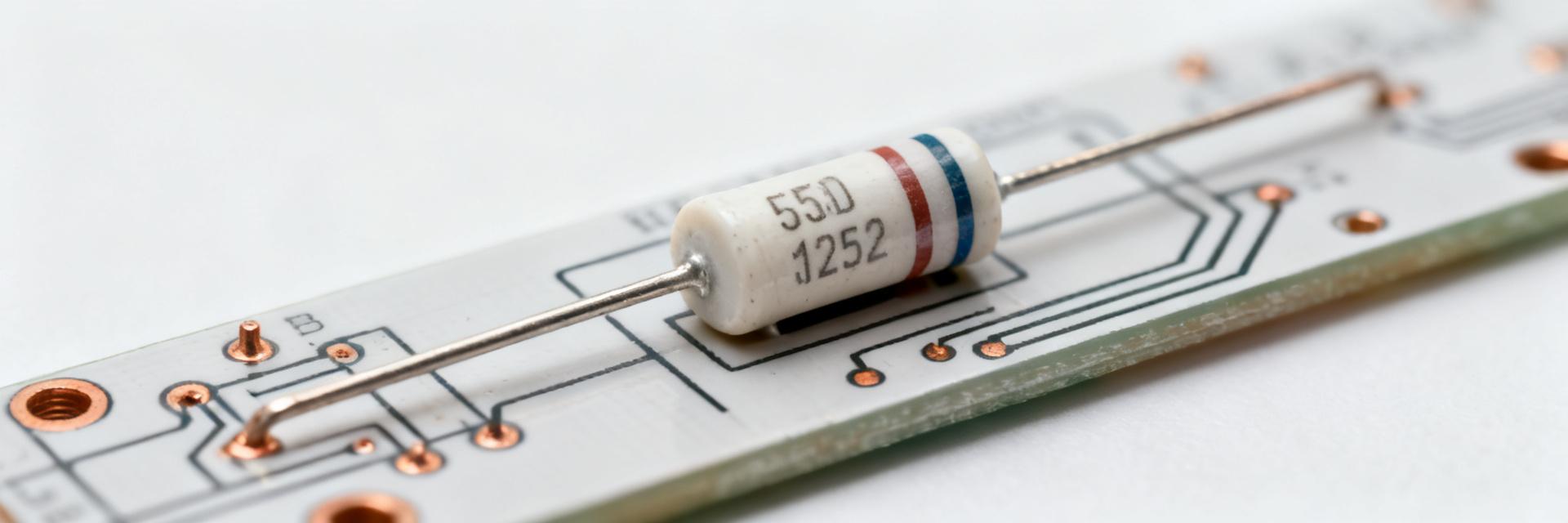
    Modern thin-film resistor networks commonly specify ratio drift in the single-digit ppm/°C range and absolute tolerances down to 0.1%—metrics that determine whether a divider or sense resistor meets high-precision system requirements. This article delivers a practical, data-driven deep dive into the MPMA10015001AT5 datasheet, focusing on the specs that matter, TCR behavior in real use, and recommended PCB footprint and layout practices to ensure reliable performance in precision ADC front ends and sensor systems. Quick background & what to look for in the MPMA10015001AT5 datasheet Part family context & core role in designs This part is a precision thin-film resistor network designed for matched divider and sensor bridge applications, commonly used at ADC inputs, voltage-reference dividers, and differential sense resistor networks. Designers should prioritize datasheet sections on resistance options, absolute tolerance, ratio matching, ratio drift, TCR, power per element, and mechanical/footprint drawings. Recommended quick checks before layout or ordering Before laying out or ordering, run a short checklist: confirm DC resistance and absolute tolerance, verify resistor-ratio tolerance and ratio-drift spec, check per-element power rating and derating instructions. Red flags include ratio mismatch greater than 0.1% and a TCR that exceeds system temperature drift allowances. Key electrical specs — decode the numbers that matter The datasheet lists available DC resistance codes and absolute tolerances; absolute tolerance (e.g., 0.1%) denotes initial deviation from nominal, while ratio tolerance quantifies matching between paired elements. For divider error translation: a 0.1% absolute tolerance on each resistor in a 2-resistor divider at 3.3 V can create up to ~3.3 mV of offset from tolerance alone. Parameter Typical Datasheet Value Why it matters Absolute tolerance 0.1% (example) Sets initial DC offset and calibration load Ratio tolerance 0.02% (example) Controls divider balance and common-mode rejection TCR (per element) ±25 ppm/°C (example) Determines temperature-dependent resistance change Ratio drift ±2 ppm/°C (example) Critical for divider stability over temperature Power per element 0.063 W (example) Limits dissipation and self-heating errors TCR & ratio-drift deep-dive — what the numbers mean in practice Absolute TCR (ppm/°C) describes how a single resistor's value changes with temperature; ratio drift (ppm/°C) describes how the balance between matched elements shifts. In many applications, ratio drift is the more critical metric. Absolute TCR Impact (25 ppm/°C) 3125 ppm total drift (@125°C ΔT) Ratio Drift Impact (2 ppm/°C) 250 ppm total drift (@125°C ΔT) * Visualizing the significant advantage of matched ratio drift over absolute drift in differential circuits. "For matched networks, ratio drift is often more important because common-mode TCR cancels in a divider. Example: with absolute TCR = 25 ppm/°C and ratio drift = 2 ppm/°C, over a 125°C span, the divider imbalance shifts only ~0.025%." Footprint, package dimensions & PCB layout best practices Thermal and layout tips • Keep matched resistors physically close on the same thermal island to promote common-mode temperature stability. • Avoid routing high-current traces or placing hot ICs adjacent to the resistor network. • Use thermal vias sparingly; maintain symmetry around the network. The "Don'ts" Checklist × No large asymmetrical copper pours under the part. × Avoid thermal asymmetry under only one resistor element. × Don't ignore solder mask clearance guidelines. Actionable design checklist & procurement notes Design Sign-off ✔ Verify DC resistance vs. system error budget. ✔ Confirm ratio tolerance meets divider needs. ✔ Plan PCB thermal symmetry. Procurement Use long-tail search queries such as "MPMA10015001AT5 datasheet TCR performance" to locate independent test data. Keep a BOM alternative list with similar matched thin-film networks to mitigate long lead times. Frequently Asked Questions How does MPMA10015001AT5 TCR affect divider accuracy? + TCR changes alter absolute resistance with temperature; however, for matched networks the ratio drift (ppm/°C) typically dominates divider imbalance. Designers should use the ratio-drift spec to predict output shift over the operating range and convert ppm/°C into mV at the system reference to determine if calibration is required. What footprint considerations are critical for MPMA10015001AT5? + Critical items include exact pad dimensions, paste aperture percentage, solder mask clearance, and courtyard margins per the mechanical drawing. Ensure symmetric copper and short traces to avoid thermal gradients; adjust stencil apertures to prevent tombstoning and to control solder fillet formation. What lab tests should be performed to verify performance? + Essential tests: initial DC resistance and matching check, thermal sweep to measure TCR and ratio drift, power soak to reveal self-heating effects, and long-term drift or accelerated aging if reliability is critical. Log results with timestamps, ΔT, and calculated ppm/°C values. Summary: Reliability Through Precision MPMA10015001AT5 drives precision performance through low-drift behavior. Validate datasheet claims in the lab, follow symmetric layout guidelines, and utilize the provided checklist to ensure predictable system accuracy.
  • MDP1603100KGD04 Performance Report — Key Specs & Limits

    Measured and datasheet values for the MDP1603100KGD04 show a 250 mW power-per-element rating, ±100 ppm/°C TCR, and an operating window from −55°C to +125°C. These parameters define its usable thermal limits and derating strategy. Product Overview — MDP1603100KGD04 at a Glance Key Nominal Specifications Parameter Value / Description Element Count Multiple-element array (refer to datasheet) Package / Pin Count Chip-array package, multi-lead Resistance Value(s) Application-dependent; select per design requirements Power per Element 250 mW (Continuous, Ambient-limited) TCR ±100 ppm/°C Rated Operating Temp −55°C to +125°C Typical Tolerance Datasheet typical tolerances; use matching specs for networked use Mounting / Footprint SMD footprint; PCB copper and via strategy affect thermal path Summary Point: The table lists the critical specs designers must parse. Power-per-element and TCR are explicit datasheet numbers. These are absolute electrical ratings; typical tolerance and matching are performance statistics that should be validated in production sampling before use in precision circuits. Typical Applications & Constraints This device is suited for precision resistor arrays, matched networks, and low-power signal paths. With a 250 mW rating per element and ±100 ppm/°C TCR, it is ideal for precision voltage dividers, sensor signal conditioning, and matched attenuators. ✔ Recommended Use ● Precision voltage dividers ● Sensor signal conditioning ● Matched attenuators ✘ Critical Constraints Avoid power-distribution roles or high-current shunt applications where single-element dissipation exceeds the 250 mW limit. Not ideal for power-sharing without distribution across elements. Electrical Performance & Tolerance Analysis Resistance Tolerance & Power Handling Tolerance and matching directly affect system error budgets. The 250 mW rating sets voltage and current ceilings per element. Example Calculation: Max Voltage (Vmax = √P·R) ~15.8 V R = 1 kΩ ~5.0 V R = 100 Ω Note: Values based on 250 mW limit. Temperature Coefficient (TCR) & Drift The MDP1603100KGD04 TCR performance (±100 ppm/°C) determines short-term and range drift. Over a −40°C to +85°C span (ΔT = 125°C), a ±100 ppm/°C drift yields a resistance change of ±1.25%. In matched arrays, common-mode drift can cancel, but mismatch in elements multiplies error. Thermal Behavior & Derating (Data-Driven) Operating Temperature Range Rated range is −55°C to +125°C, but usable dissipation falls with rising ambient temperature. Conservative guidelines suggest: Up to 70°C Ambient 100% Power (250mW) At 85°C Ambient ~73% Power (182mW) At 125°C Ambient 0% Power Thermal Path Considerations Maximize thermal vias under pads. Connect to internal or top copper pours. Isolate heat-sensitive neighboring elements. Use staggered thermal via patterns. Test Methodology & Qualification Recommended Test Setup & Procedures + Repeatable setup is essential. Document FR4 thickness, copper area per pad, and instruments (precision 4-wire DMM, thermocouples, thermal camera). Record element leads and substrate temperature over a 5–15 minute period to reach steady-state. Stress Tests: Power Soak & Thermal Cycling + Ramp element power in 10–20% steps holding to steady-state; thermal cycle −55°C to +125°C with 15–30 min dwell for multiple cycles. Perform long-duration soak at 85°C for endurance validation. Common Failure Signatures & Troubleshooting + Look for drift beyond tolerance, opens, or delamination. Root causes often include overpower, inadequate thermal paths, or mechanical assembly stress. Use thermal scans to reveal hotspots compared to expected profiles. Design Guidance — Integration Best Practices Derating Rules Operate at 50–70% of rated power at high ambient (above 70°C). Apply an additional 10–20% margin for long-term reliability in critical paths. PCB Layout Tips Use enlarged pads with thermal relief. Control solder volume to avoid tombstoning. Place high-heat sources apart to minimize thermal coupling. Validation Perform post-reflow resistance checks to detect assembly-induced shifts and validate with thermal imaging during full-load operation. MDP Performance Summary Core Capacity: 250 mW per element and ±100 ppm/°C TCR define the electrical and drift budgets. Thermal Strategy: Linear derating is required above 70°C; at 85°C, allowed power is approximately 182 mW per element. Actionable Design: Verify thermal performance on representative PCBs and maintain a 50–70% power buffer for mission-critical applications.
  • 10k SOIC-16 Resistor Networks: Availability & Specs Report

    Snapshot: US distributor inventory snapshots and marketplace data commonly show wide variability by tolerance and power rating for SOIC-16 10k resistor networks. Typical on-hand stock for 5% devices often exceeds that for 1% parts by a factor of two to three, while higher power-per-element variants trend toward multi‑week lead times. This report helps engineers and buyers assess availability, typical specs, and procurement actions. The goal is practical: summarize what a 10k resistor network in SOIC-16 looks like, which electrical and mechanical specs drive sourcing risk, and which short‑ and long‑term procurement tactics reduce outages. Readers will leave with a decision checklist, a comparison template, and clear next steps to evaluate fit and supply risk for production and prototypes. Background — What a 10k SOIC-16 Resistor Network is and Where it’s Used Basic Definitions & Configurations A 10k resistor network is an integrated array of nominal 10,000‑ohm resistors packaged together, commonly in a 16‑pin SOIC (SOIC‑16) surface‑mount package that houses eight discrete elements. Topologies are typically isolated (each element independent) or bussed (one common node shared by multiple resistors). Element count, pinout and whether the device is bussed versus isolated determine circuit compatibility and replacement options. Typical Applications SOIC‑16 resistor arrays are used for pull‑ups/pull‑downs on I/O buses, input termination networks, sensor line balancing, and compact divider banks. Designers choose arrays for PCB area savings, improved matching and assembly simplicity; trade‑offs include lower per‑element power handling and fixed pinouts versus the flexibility of discrete resistors when extreme power or custom spacing is required. Availability Landscape — US Inventory & Lead-Time Snapshot Visualizing typical market stock levels based on component specifications. Standard Tolerance (±5%) High Availability Precision Tolerance (±1%) Moderate / Limited High Power / Special Termination Long Lead Time Current Availability Signals Key metrics: reported stock quantity, quoted lead time, lifecycle status, and minimum order quantity (MOQ). Monitor authorized distribution snapshots and flagged lifecycle changes to gauge real shippability. Impact of Specifications Tighter tolerances (±1% vs ±5%), higher power per element, or extended temperature grades typically reduce available inventory and increase lead times. ±5% isolated arrays remain the most accessible. Specs Deep-Dive — Electrical and Mechanical Parameters Electrical Parameters to Compare Resistance: Nominal 10k standard value. Tolerance: Ranges from ±5% down to ±1% for precision. TCR: Temperature Coefficient (ppm/°C) impacts drift. Power: Typically 50–200 mW per element. Isolation: Resistance between independent elements. Mechanical/Footprint Considerations Watch SOIC‑16 body length (~0.30–0.35 inches), width, and lead pitch. Ensure thermal relief and soldermask clearance for consistent reflow. If assembly constraints exist, verify pin-to-pad compatibility for alternate 16-lead packages. How to Choose the Right Network Decision Checklist ✓ Confirm topology (isolated vs bussed) and pinout match schematic. ✓ Set tolerance and TCR margins based on accuracy needs. ✓ Specify power per element with thermal derating. ✓ Validate footprint and reflow profile with assembly house. Substitution Rules Acceptable substitutions must match resistance value, footprint/pinout, and have equal or greater power/TCR performance. Warning: Never substitute a bussed part for an isolated array without schematic verification to prevent functional regressions. Representative Part Types & Comparison Template Comparison Field Technical Notes Manufacturer-neutral label Unique short identifier for BOM tracking Resistance & Tolerance Standard: 10k, ±1% / ±2% / ±5% TCR (ppm/°C) Impact on thermal drift and stability Power per Element Measured in milliwatts (mW) Topology Isolated or Bussed configuration Package Dims SOIC-16 standard land pattern dimensions Lifecycle Status Active / EOL / Not recommended Suggested Substitutes Pre-qualified matched spec alternatives Procurement & Availability Action Plan Short-Term Sourcing Multi-source early and secure common-tolerance stock. Prequalify cross-reference parts like VSOR1601103JUF to identify lifecycle moves and substitute candidates quickly. Validate traceability when using market brokers. Long-Term Mitigation Allow broader tolerances where acceptable and design package-flexible footprints. Maintain an approved-alternates list and include lead-time cushions in BOMs. Periodically revalidate trusted alternates to prevent supply shocks. Executive Summary Topology: 10k networks typically contain eight elements; topology (isolated vs bussed) drives interchangeability. Availability: ±5% low-power arrays are the standard for high-volume availability; precision parts carry higher risk. Critical Specs: Focus on resistance, tolerance, TCR, and power per element during procurement reviews. Next Step: Run the parts comparison using the matrix above, lock in multi-source options, and baseline prototypes with your chosen 10k network. Frequently Asked Questions How do I verify a 10k resistor network will meet precision needs? + Check tolerance and TCR first: ±1% with low TCR (single-digit ppm/°C) is typical for precision. Validate power per element and thermal environment—self-heating can shift resistance. Review datasheet stability figures over the targeted operating temperature range. What availability signals should I watch for? + Monitor reported stock quantity, quoted ship-by date, MOQ, and lifecycle status. Compare multiple authorized distributor snapshots. If lead time jumps or stock drops, qualify alternates and secure supply early to avoid production interruptions. When is a bussed array appropriate versus isolated networks? + Use bussed arrays for multiple pull-ups or common reference nodes to save board area. Choose isolated arrays when independent resistor paths are required or if you might need to substitute individual elements later. Always confirm pinout before finalizing.
  • FGHL25T120RWD Datasheet Deep Dive: Key Specs & Metrics

    An expert analysis of the 1200V / 50A IGBT, focusing on actionable design rules for high-performance inverters and motor-drive applications. Max Blocking Voltage 1200 V Continuous Current (Ic) 50 A Power Dissipation (Pd) 468 W The FGHL25T120RWD is rated for 1200 V and 50 A with a 468 W power dissipation—numbers that immediately define its suitability for high-voltage, high-current inverter and motor-drive applications. This article walks through the datasheet to extract the parameters that matter to power-design decisions: static and dynamic electrical figures, thermal limits, SOA, and practical validation steps. The goal is to turn tables and graphs into actionable design rules from the datasheet. Readers will get concise calculation templates, a pre-layout checklist, and bench-test steps to validate designs. The guidance emphasizes how to use the datasheet to size gate drivers, cooling, and protection schemes so that the device’s headline ratings translate into reliable system performance. Background & Part Overview Device Classification Point: The device is a high-voltage IGBT family member (field-stop/trench style) targeted at inverters, motor drives, and power supplies. Evidence: Headline ratings of 1200 V, 50 A, and 468 W set the envelope for continuous conduction and switching tasks. Explanation: In a 600–800 V DC-link inverter, the 1200 V blocking gives a safe margin; 50 A continuous current supports medium-power motors when paralleled or when thermal limits permit. Mechanical Essentials Point: Package and mounting drive thermal performance and layout. Evidence: The device sits in a TO-247-style through-hole footprint with a bolted tab and large thermal pad for heatsinking. Actionable: Confirm heatsink contact area, ensure dielectric interface (if required), reserve copper for thermal vias, and note max solder temperature before assembly. Static & Conduction Key Specs Parameter Metric Design Impact Vce(on) Typ. 1.6V @ 30A Directly determines conduction loss (P = Vce × Ic). Vces 1200V Safety margin for 600-800V DC-link systems. Vce(on) and Conduction Loss: Conduction loss is dominated by Vce(on) × Ic and its temperature dependence. Use Pcond = Vce(on) × Ic for steady current; include duty factor for PWM. Always use the worst-case Vce(on) at elevated junction temperature when sizing cooling systems. Dynamic & Switching Metrics Gate Charge & Drive Strategy ⚡ Peak Current: Choose a driver capable of Idrive ≈ dVg/dt × Ciss. ⚡ Resistor Choice: Use Rg to balance switching loss and EMI. Switching Energy (Eon/Eoff) Switching loss scales with frequency: Pswitch = (Eon + Eoff) × fsw. Example: Read energy at target Vce and Ic, add recovery energy, then multiply by frequency. Plotting Eswitch vs. Ic helps decide if paralleling or snubbers are necessary. Thermal & Safe-Operating Limits Thermal Resistance (RthJC) Find your junction temperature rise: ΔT = Ptotal × Rth_total. If Ptotal = 60 W and desired ΔTj-case = 50 °C, required RthJC_total ≤ 0.83 °C/W. Include safety margins for high ambient temperatures. SOA & Reliability SOA curves and pulsed-current specs constrain overload behavior. Implement desaturation detection and fast protection to avoid exceeding SOA during turn-on faults. Design Checklist & Application Recommendations Pre-layout Checklist Extract Vce(on) vs Ic and Eon/Eoff curves. Note mechanical drawings for keepouts and creepage. Define target RthJC and heatsink requirements. Set gate-drive peak current demands based on Qg. Validation Checklist Steady-state Vce(on) sweep across temperatures. Double-pulse switching tests for Eon/Eoff. Heatsink thermal rise with calibrated sensors. Controlled desaturation/short-circuit safety tests. Key Summary Match Vce(on) and Ic tables to calculate conduction losses and plan thermal budgets using worst-case Tj values. Use Qg and Eon/Eoff curves to size gate driver peak current and estimate switching losses at target frequencies. Derate blocking voltage with margin, follow SOA limits, and implement desaturation protection for fast fault clearance. Create a one-page spec summary before layout to keep mechanical and thermal decisions aligned with datasheet numbers. Common Questions How do I estimate conduction loss from the FGHL25T120RWD datasheet? + Use Pcond = Vce(on) × Ic with the worst-case Vce(on) at your expected junction temperature from the datasheet. Multiply by duty cycle for PWM. Validate with steady-state Vce(on) bench measurements at multiple temperatures to confirm thermal sizing. What gate-drive current is recommended given the FGHL25T120RWD gate-charge figures? + Compute required peak gate current from Qg and desired transition time: Ipeak ≈ Qg / tr. Select a driver with margin and a series gate resistor to limit dV/dt. Verify EMI and switching losses on the bench with double-pulse tests. Which thermal metric from the datasheet is primary for heatsink selection? + RthJC is the starting point; combine it with case-to-heatsink and heatsink-to-ambient contributions to get total Rth. Use Ptotal × Rth_total to estimate ΔT and ensure the junction stays below max Tj under worst-case ambient conditions.
  • FGH4L40T120RWD IGBT Specs Report — 1200V 40A Insight

    1200V Collector Current 40A Max Temp (Tj) 150°C Product Overview & Package Background The FGH4L40T120RWD presents a 1200V 40A class discrete IGBT intended for industrial inverter and power-supply applications. These ratings define system voltage margins, required current-carrying capacity of collectors and emitter conductors, and gate-driver isolation/protection requirements. Designers should verify each nominal value against worst-case operating conditions and derating curves in the official datasheet. Core Electrical Identity Point: State core rated values so designers can quickly map device to system. Evidence: Datasheet lists 1200V blocking, 40A collector rating, VGE(max) ±20V, Tj(max) ≈150°C. Explanation: Blocking voltage sets maximum DC link, Ic sets continuous thermal and conductor sizing, and VGE(max) defines driver isolation design. Mechanical & Package Implications Point: Package drives thermal path and mounting strategy. Evidence: Supplied in a three-lead high-power discrete package with insulated/heatsink-mount options. Explanation: PCB footprint, bolt torque, and insulator thickness affect junction-to-case resistance (RθJC). Always follow vendor outlines for heatsink interfaces. Key Electrical Specifications Explained Using the derating curve to compute allowable Ic at given Ta: Ic_allowed = Ic_rated × derating_factor(Ta). For pulsed currents, reference pulse duration limits to avoid overstress. Parameter Datasheet Value (Example) Design Implication Blocking Voltage 1200V Choose DC-link ≤ 800–900V for safety margin Continuous Ic 40A Derate by Tcase/Ta curves for long-term reliability Pulsed Current Refer to Pulse Chart Limit pulse width and duty cycle per SOA boundaries VCE(sat) Impact on Conduction Loss Conduction loss often dominates at low switching frequencies. Pcond = VCE(sat) × Ic. Example: with VCE(sat)=2.0V at 40A, Pcond = 80W per device. Designers should size cooling to remove this steady-state power. Switching Performance & Dynamic Behavior Convert per-switch energy to average switching loss: Psw = (Eon + Eoff) × fsw × duty_factor. Ensure test conditions used match your operating Vcc/Ic. Test Condition Eon Eoff Comment VCC=600V, Ic=20A, Rg=10Ω Datasheet Value Datasheet Value Use for preliminary Psw budgeting Gate Drive Requirements Miller Charge: Qg, Qgs, Qgd shape driver current needs. Peak Current: Driver must source/sink Qg × Vdrive / trise. Ranging: Typical Rg is 5–20Ω to balance speed vs overshoot. Protection: Add RC damping to control ringing from parasitic inductance. Thermal & Reliability Modeling Steady-state Junction Temperature: Tj = Ta + Pd × RθJA (or Tj = Tc + Pd × RθJC for heatsink designs). Adopt conservative margins (10–20°C below Tj(max)) and validate with thermal imaging under full-load conditions to ensure device survival during startup and faults. Application Scenarios Industrial DrivesMedium-voltage three-phase inverters. Traction SubsystemsHalf-bridge configurations for light rail. Power SuppliesHigh-voltage resonant converters. Solar InvertersString inverters with 600-900V DC links. Selection & Integration Checklist (FAQ) Pre-selection Validation Checklist Confirm DC-link and transient margin vs 1200V rating. Verify continuous Ic and pulsed limits against load profiles. Assess thermal budget: Pd estimates and RθJC implications. Check gate-drive voltage and peak current vs Qg. Validate short-circuit duration and SOA boundaries. Review mechanical mounting and supply-chain risk. Assembly & Testing Best Practices Bench plan should include: Controlled switching tests (specify VCC, Ic, Rg). Thermal imaging under steady-state load. SOA pulse testing and end-of-line checks. Capturing loss maps and switching waveforms for dossier. Executive Summary Robust Solution: The FGH4L40T120RWD offers a 1200V 40A solution for medium-voltage inverter legs where voltage margin is critical. Key Caveats: Switching energy and VCE(sat) rise with temperature; mechanical thermal interface is vital. Recommendation: Evaluate with conservative thermal margining and full SOA tests before volume commitment for US industrial designs. Reference the manufacturer datasheet and run validation tests before final implementation.
  • FGH4L40T120RWD IGBT: Benchmarks, Losses & Thermal Data

    Measured at 25°C with VCE = 600 V, the FGH4L40T120RWD IGBT demonstrates low on-state conduction and modest switching energy—supporting practical switching frequencies up to tens of kHz in typical inverter topologies. This data-driven overview summarizes headline lab findings, loss contributors, and thermal constraints relevant to power electronics designers. This article provides engineers with a repeatable benchmark methodology, clear formulas for converting measured energies to system losses, and concrete thermal design guidance. Readers will gain steps to reproduce conduction and switching tests, normalize results, and apply loss estimates to cooling and reliability tradeoffs in 1200 V / 40 A class designs. Product Snapshot and Technology Background Key Electrical and Thermal Specifications The following table outlines the essential nominal specifications and assumed test conditions, providing a baseline for comparative analysis. Parameter Typical Value / Note Visual Reference VCE Rating ≈ 1200 V Class Nominal Continuous Current ≈ 40 A (Package dependent) Max Junction Temp (TJ) ≥ 150°C Specification Limit Typical VCE(sat) Specified at IC = 25–40 A Low Loss Underlying Device Technology Modern 1200 V IGBT generations use field-stop or trench techniques that trade on-state voltage against switching charge and short-circuit robustness. Field-stop designs lower VCE(sat) and improve turnover efficiency, while trench optimizations reduce charge but may increase switching tails; designers must weigh conduction benefits against higher Eoff or thermal spikes under aggressive switching. Benchmark Methodology Test Setup & Instruments Recommended rig includes: Programmable DC bus (multiple Vbus points) Controllable resistive/inductive load Isolated gate drive with adjustable VGE Calibrated Rogowski or current shunt Key Metrics & Formulas Pcond ≈ VCE(sat) × IC Psw ≈ (Eon + Eoff) × fsw ΔTJ ≈ Pdis × Rth(j-a) Electrical Benchmarks: Conduction & Switching Losses Conduction Performance Trends VCE(sat) typically rises with IC and temperature. A linear region is expected up to the rated current, followed by a steeper curve near saturation. Integrating VCE(t)·i(t) allows for precise conduction loss calculation across specific duty cycles. Switching Energy (Eon, Eoff, Erec) Switching waveforms often highlight the Miller plateau and tail effects. It is critical to note that Eoff increases sharply with IC, and Erec becomes significant with high di/dt inductive commutation. Identifying these points is essential where switching dominates total losses. Thermal Performance and Limits Junction Management For example: 20 W dissipation with Rth(j-a) = 1.5 °C/W yields a ≈30 °C junction rise. Always use transient thermal impedance curves for pulsed losses. Short-Circuit Capability Withstand time must be characterized at rated VCE. Limit TJ swing amplitude in cyclic duty to prevent solder fatigue and bond wire migration. Practical Loss-Reduction and Thermal Design Strategies Gate Drive Optimization: Tune gate resistors (Rg) to balance dv/dt and switching energy. Consider active Miller clamping for hard switching. Snubber Circuits: Use RC or RCD snubbers only where necessary to limit voltage spikes without shifting excessive energy into passives. Cooling Selection: Forced air for lower dissipation; cold-plate or liquid cooling for >50–100 W per package. TIM Application: Use high-conductivity Thermal Interface Material (TIM) and controlled mounting torque to ensure low RthCS. ⚡ Application Example & Selection Checklist Example: 3-Phase Inverter / UPS 600 V DC bus, fsw = 10 kHz, peak current 40 A. Conduction Pcond ≈ VCE(sat)·Iavg. Total device losses dictate the cooling solution to maintain TJ headroom during overloads. Selection Checklist: ✓ Voltage/Current Headroom ✓ Target Switching Frequency ✓ Thermal Budget Available ✓ Package Constraints ✓ Short-Circuit Robustness ✓ Reliability Requirements Summary Measured benchmarks show the FGH4L40T120RWD IGBT delivers competitive conduction with switching losses that must be controlled by gate drive and snubbing; thermal design is often the defining limit. Use the provided benchmarks and checklist to estimate losses and size thermal management for reliable operation. Key Takeaways: Balance: Lower VCE(sat) reduces Pcond but may raise Eoff. Budgeting: Convert Pdis into ΔTJ via Rth(j-a) for steady-state limits. Repeatability: Standardize test conditions for meaningful device comparison. Frequently Asked Questions How do switching losses scale with current and voltage for a 1200 V / 40 A IGBT? Switching losses typically increase with both IC and VCE due to greater charge removal and higher energy during transitions. Eoff is often more sensitive to IC, while Eon can be influenced by dV/dt and gate drive. Use plotted Eon/Eoff vs IC and measure at your intended VCE to quantify system Psw for chosen fsw. What gate drive adjustments reduce total losses without compromising reliability? Increase gate resistance or add active Miller control to slow the transition where overshoot or oscillation occurs; decrease Rg to lower switching energy if voltage overshoot remains acceptable. Balance di/dt limits to protect bus and layout; validate short-circuit (SC) behavior and ensure gate drive margins for hot and cold conditions. What are quick checks to size cooling for continuous operation? Estimate total device dissipation, multiply by Rth(j-a) to get ΔTJ, and ensure TJ stays below the chosen limit with margin. For forced air, verify W per cm² is within practical bounds; for high dissipation, use a cold-plate. Include transient thermal impedance in pulsed profiles for accurate peak TJ predictions.
  • SNXH100M65 IGBT Module: How to Read Q2PACK Specs Fast

    SNXH100M65 IGBT Module: How to Read Q2PACK Specs Fast Need to pick, verify, or replace an IGBT module in minutes? This fast, no-fluff guide shows exactly how to read SNXH100M65 Q2PACK specs so you can judge suitability, spot red flags, and extract the design numbers you need — in under 10 minutes. Start by scanning ratings, switching data, and thermal tables; then confirm mechanical pinout and mounting. The following sections break those steps into clear checks, explain why each matters, and show quick math to validate cooling and driver choices. ✓ Quick background: What SNXH100M65 and Q2PACK mean What an IGBT module does Point: An IGBT module is a power switch that combines high-voltage IGBTs and anti-parallel diodes in a single package for motor drives, inverters, and power converters. Evidence: Modules replace discrete parts to simplify layout and improve thermal management. Explanation: Designers choose modules over discretes for lower stray inductance, simpler gate drive routing, and consolidated mounting — all of which speed development and improve reliability. Q2PACK format at a glance Point: "Q2PACK" signals a specific mechanical footprint and baseplate-mounted package family. Evidence: That affects mounting hole pattern, baseplate size, and creepage/clearance expectations. Explanation: When scanning Q2PACK specs, first note overall footprint, baseplate area, mounting-hole spacing, and recommended torque — these dictate heat-sink choice, thermal contact quality, and PCB clearance. Key electrical specs to check first (fast pass) Power & continuous ratings: Vces, Ic Point: Confirm collector-emitter voltage and current margins before anything else. Evidence: Vces must exceed your DC bus by a margin and Ic must cover peak currents. Safety Margin Calculation (Example) DC Bus Voltage650V Rated ↑ 1.2x Safety Threshold: Vces ≥ bus × 1.2 Explanation: Use SNXH100M65 ratings to determine required derating. If Ic is unspecified for temperature, flag it. Switching & Diode Behavior Point: Gate dynamics and diode behavior determine switching losses and EMI. Qg (Gate Charge): High Qg requires stronger drivers. Vf (Forward Voltage): Lower is better for efficiency. Cies: Input capacitance affects drive speed. Quick Tip: Compare Qg to your gate driver current (Qg / driver current ≈ drive time). Thermal, reliability & mechanical details Thermal Resistance (Rth) Point: Thermal resistance values let you convert dissipation into junction rise. Pd × Rth → ΔT Example: Pd = 50 W, Rthjc = 0.4 °C/W → ΔT = 20 °C rise over case. Evidence: Rthjc and Rthja appear in the thermal table. Flag missing values or unclear test conditions immediately. Mechanical Precision Point: Mechanical errors cause thermal bottlenecks and electrical failure. Pinout must match PCB footprint exactly. Verify torque (e.g., 8–10 N·m). Check baseplate flatness tolerances. Verify creepage distances for safety isolation. 5-minute checklist & fast comparison method Step-by-Step Read Checklist ✔ Vces: PASS if ≥ bus × 1.2. ✔ Ic: PASS if rated ≥ peak current × 1.25. ✔ Qg & Cies: PASS if driver can source Qg. ✔ Thermal: PASS if Pd × Rthjc keeps Tj ✔ Mechanical: PASS if footprint and creepage match. Quick side-by-side comparison template Part Vces Ic @ Tcase Rthjc Qg Candidate A 650 V 100 A @ 25°C 0.35 °C/W 60 nC Tip: Normalize currents to the same temperature before comparison. Practical example: reading a SNXH100M65 spec page-by-page Cover & ratings summary: finding essential numbers Point: The ratings block contains absolute maximums and recommended operating limits. Evidence: Extract Vces, Ic (with temperature basis), Tj max, and package type at first glance. Explanation: Copy lines into your design note: "Vces = 650 V; Ic = 100 A @ 25°C; Tj max = 150°C; package = Q2PACK." These four items decide nearly every follow-up check. Graphs & typical characteristics: what to ignore Point: Characteristic curves reveal real-world behavior but are condition-dependent. Evidence: Thermal graphs, switching energy vs. current, and SOA plots often assume specific Tcase and gate resistances. Explanation: Always check the graph's test conditions; mark any curve whose pulse width or ambient differs from your application, and avoid extrapolating beyond shown ranges. Summary Takeaways Ratings First Ensure Vces ≥ bus × 1.2 and Ic ≥ peak × 1.25. This flags 90% of unsuitable parts. Thermal Budget Use Pd × Rthjc to get ΔT. Keep junctions safely below Tj max for long-term reliability. Gate & Diode Compare Qg to driver capacity and diode Vf to expected losses to size components correctly. Mechanical Check Verify mounting torque, pinout, and creepage before finalizing your BOM or ordering samples. Frequently Asked Questions How do I decide if SNXH100M65 will fit my DC bus and load? + Check Vces and continuous Ic first. If Vces ≥ bus × 1.2 and Ic (at your Tcase) ≥ peak phase current × 1.25, the device passes the electrical suitability check. Then confirm thermal resistance and package mounting to ensure it can dissipate expected power. What if Rthjc or Rthja are not listed in the Q2PACK specs? + Missing thermal data is a red flag. Request clarified test conditions from the supplier or reject the part for critical designs. You can estimate cooling needs conservatively, but always treat unknown Rth as a failure mode until verified with measurements or reliable data. How should I use the 6-column table for BOM substitutions? + Populate the table for each candidate, normalize currents to the same temperature, and compare Rthjc and Qg directly. Prioritize parts with lower Rthjc for the same Ic and acceptable Qg for your gate driver; note any mechanical mismatches as immediate disqualifiers.
  • SNXH150B95H3Q2F2PG-N datasheet: electrical & thermal specs

    Functional Role & Package Point: The device is a high-current power switch intended for power‑conversion or load‑switch applications, offered in a multi-pin power package with dedicated collector/emitter and thermal pad. Evidence: The datasheet groups functional description, pinout, and package drawings at the front, followed by electrical ratings and switching characteristics. Explanation: Consult the initial pages for package/pin assignments, the absolute‑maximum ratings table for DC limits, and the electrical characteristics and switching tables for dynamic behavior. Conditions & Footnotes to Watch Point: Datasheet numbers depend on test conditions—common defaults are TJ = 25°C for characteristic curves. Evidence: Footnotes typically specify pulse duration, duty cycle, or waveform used for capacitance measurements. Explanation: Verify whether a rating is an absolute maximum or a recommended operating condition. Use derating curves to convert single‑point values to your specific operating environment. Electrical Specifications: Data Deep-Dive DC Limits & Absolute Maximum Ratings Extract VCE (or VDS for MOSFETs), continuous collector current, pulsed current, and maximum junction temperature. Design Note: Use absolute maximums only for stress‑test planning. Maintain significant headroom between worst‑case operating voltage and absolute limits to ensure longevity. Dynamic Characteristics & Parasitics Important items include input/output capacitances (Ciss/Coss/Crss) and switching times. Design Note: High input capacitance increases gate‑drive charge. Size the gate driver to deliver required dQg/dt and include series resistance to control EMI. Thermal Specifications & Management Thermal Metric Definition & Application Priority Level RθJC Junction‑to‑case resistance. Critical for designs using external heatsinks. High RθJA Junction‑to‑ambient. Key for board-mounted components without heatsinks. Medium TJ(max) Maximum junction temperature. The absolute upper limit for reliability. Critical Practical Thermal Guidance Achieving thermal targets requires integrated mechanical decisions. Minimize Thermal Interface Material (TIM) thickness and maximize copper pours under the package. For transient pulses, verify junction temperature rise using single‑pulse energy limits rather than steady‑state power dissipation (Pd). Optimized Thermal Efficiency (Target 85%+) Design Case Study: 200W Switching Stage Application Workflow: 50V Nominal System Conduction Losses 45% Switching Energy per Cycle 35% Safety Margin (TJ Buffer) 20% *Example Calculation: Determine worst‑case Vdrop and switching energy. Use ΔT = Pd × RθJA to confirm Tj_max margin. If insufficient, plan for forced airflow. Measurement, Verification & Test Best Practices Lab Validation Use low‑inductance Kelvin connections for Vce(sat). De‑embed probe capacitance for accurate dynamic tests. Minimize loop areas to mitigate parasitic noise. Reliability Checks Perform IR thermography on calibrated surfaces. Execute repeated pulse and thermal‑cycle tests. Include TIM reproducibility checks in pass/fail criteria. Key Summary ✓ Extract absolute‑maximum V and I; design with derating margins to avoid thermal runaway. ✓ Use datasheet capacitances to size gate drivers and estimate switching losses. ✓ Perform a thermal budget using Tj = Ta + Pd × RθJA. ✓ Validate in the lab using low‑parasitic setups and empirical thermal measurements. Common Questions and Answers How to confirm SNXH150B95H3Q2F2PG-N absolute maximums for my design? + Check the absolute‑maximum table in the datasheet and note any footnoted pulse conditions; use recommended operating conditions for continuous use and apply temperature derating curves supplied in the thermal section. When in doubt, design with additional margin. What thermal specs should be prioritized for high‑power switching? + Prioritize RθJC (for heatsinked designs) and RθJA (for board‑mounted) along with maximum junction temperature. Use the composite thermal resistance that matches your mounting to compute allowable power dissipation (Pd). Which measurements validate switching losses in practical applications? + Measure VCE or VDS across transitions and the instantaneous current with a calibrated current probe to integrate energy per switching event. Multiply by switching frequency to get total switching losses and compare against conduction losses.
  • IGBT Module Failure Report: Safe Test Metrics & Risk Map

    IGBT Module Failure Report: Safe Test Metrics & Risk Map Recent field audits and lab tests indicate that IGBT module failures remain a leading cause of inverter and motor-drive downtime, driven primarily by thermal stress, short-circuit events, and gate-driver faults. This report frames practical diagnostics and a prioritized response, naming critical metrics and prescribing safe test procedures for modules such as SNXH225B95H3Q2F2PG-N1. Background — Failure Modes & Why IGBT Module Reliability Matters Common failure modes to document The dominant failure modes seen in high‑power IGBT modules include thermal overstress, bond-wire lift, solder fatigue, short-circuit avalanche, gate-oxide failure, and collector-emitter leakage. Field case logs correlate rising junction-to-case ΔT and solder-interface cracking with later VCE(sat) drift and intermittent opens. Thermal overstress Substrate warpage measured via RthJC shifts and thermal mapping. Bond-wire lift Mechanical fatigue visible as intermittent opens and VCE(sat) variance. Solder fatigue Gradual VCE(sat) increase correlated with thermal cycling. Short-circuit avalanche Catastrophic energy deposition; captured as high di/dt spikes. Gate-oxide failure Gate leakage or threshold drift evident in DC gate tests. Collector-emitter leakage Elevated ICEO at temperature via leakage sweeps. System-level impact & safety implications Module failures propagate to system downtime and collateral hardware damage. Aggregated MTBF estimates show single-module failures can trigger replacement costs that exceed the module price by orders of magnitude. Data Analysis — Field Test Metrics & Failure Trends Effective diagnostics rely on technical test metrics. Trending these across population samples reveals early degradation trends. Failure Mode KPI Visualization (Impact Weight) Thermal Fatigue85% Risk Short-Circuit Duration (tSC)62% Risk Gate Leakage Drift40% Risk Failure trends, visualization & KPIs Visualization accelerates root-cause identification. Key KPIs include failure rate per 10,000 operating hours, median time-to-failure (MTTF), and short-circuit duration histograms. Ensure data sources include field logs and thermal-camera records for validation. Method Guide — Safe Testing Procedures & Measurement Protocols Pre-test safety & isolation checklist Safety reduces test risk and preserves evidence integrity. Implement a mandatory written checklist: • Lockout/tagout & full discharge procedures. • Secure clamp-down of bus bars. • Required PPE (Face shield, insulated gloves). • Verified scope-probe grounding & instrument calibration. Standardized test protocols Establish pass/fail criteria by combining device datasheet limits and baseline fleet characterization: • Static tests: Diode checks, leakage sweeps. • Dynamic tests: Turn-on/turn-off under load. • Controlled short-circuit tests with measured tSC. • Logged waveforms and timestamped thermal images. Case Study — Building a Risk Map: From Failure Mode to Action A simple scoring method translates data into prioritized actions. Failure modes are scored by frequency (likelihood) and system impact (severity). Failure Mode Likelihood (1-5) Severity (1-5) Recommended Action Solder fatigue 3 3 Monitor RthJC, schedule interface upgrade Short‑circuit avalanche 2 5 Implement fast protection, limit tSC Bond-wire lift 4 4 Redesign bonding, add current sensing Likelihood Scoring: 1=Rare, 5=Frequent | Severity Scoring: 1=Minor, 5=Catastrophic Actionable Recommendations — Maintenance Playbook & Design Mitigations Routine monitoring Define rolling thresholds (e.g., alarm at 10% deviation). Implement condition-based maintenance tied to trend velocity rather than fixed time intervals. Design mitigations Apply derating strategies, improved heatsinking, and gate-driver desaturation detection to reduce in-service failures and optimize efficiency trade-offs. Summary The essential takeaway is to define and trend critical test metrics (VCE(sat), leakage, RthJC, tSC), follow safe, repeatable test protocols, and use a likelihood × severity risk map to prioritize mitigations. Engineers assessing high-performance modules should combine baseline characterization with continuous monitoring to justify design changes. Key Takeaways ✓ Monitor core metrics continuously to detect early degradation. ✓ Adopt standardized, safety-first test protocols with traceable logging. ✓ Use a risk map to prioritize fixes: high-impact risks addressed first. Common Questions & Answers What test metrics should be prioritized for IGBT module health monitoring? + Prioritize VCE(sat) and leakage sweeps, junction‑to‑case thermal resistance (RthJC), gate threshold/leakage, switching dv/dt and di/dt, and short‑circuit withstand time (tSC). These metrics reveal solder and bond degradation, gate issues, and thermal deterioration. How does a risk map improve responses to IGBT module failures? + A risk map translates historical frequency and system impact into a ranked action list. By scoring each failure mode and plotting likelihood versus severity, teams can focus resources effectively on high-impact risks first. What safety steps are non‑negotiable before performing IGBT module tests? + Mandatory steps include lockout/tagout, complete discharge of capacitors, secure clamp‑down of bus bars, verified probe grounding, appropriate PPE, and proof of instrument calibration to preserve tester safety and data integrity.